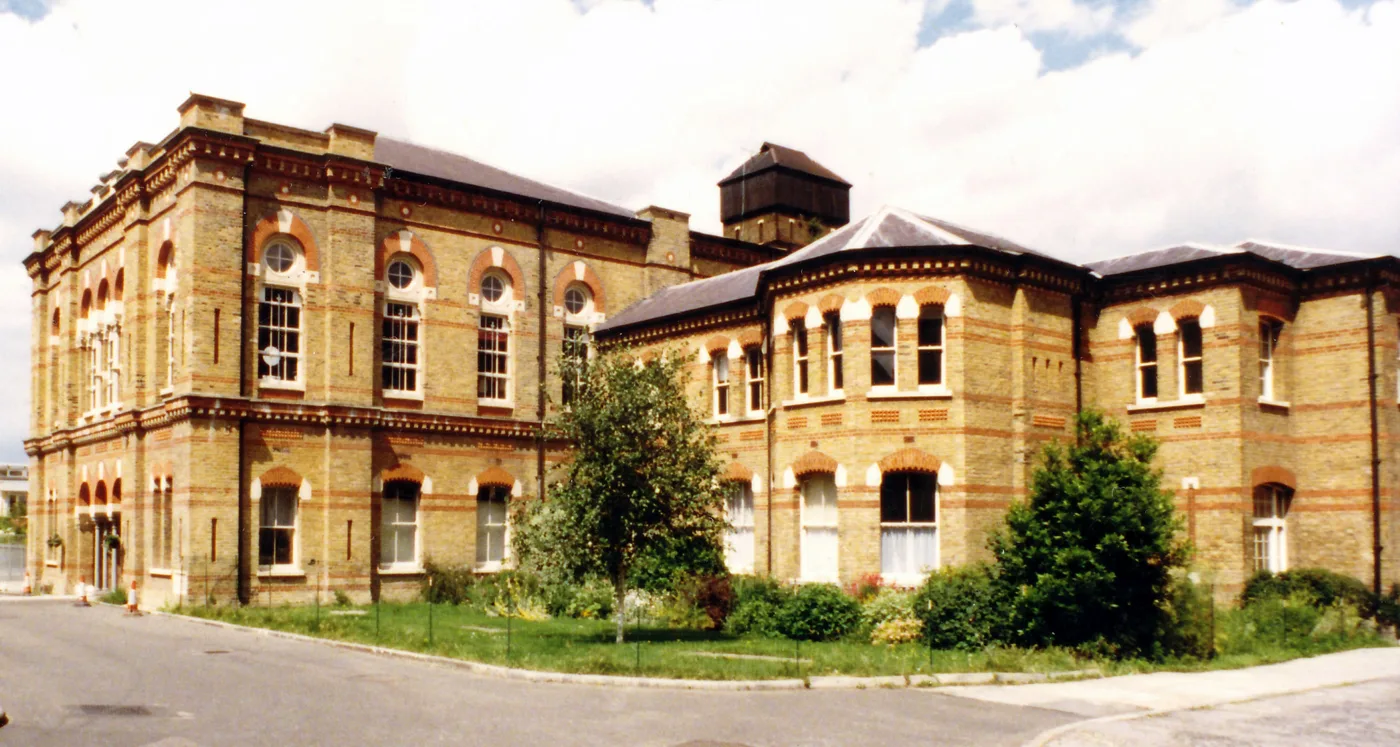

The Kennington museum in Chaplin's old workhouse has raised £99,600 of the £500,000 it needs to buy its building by 13 November. Its annual income is £170,368.
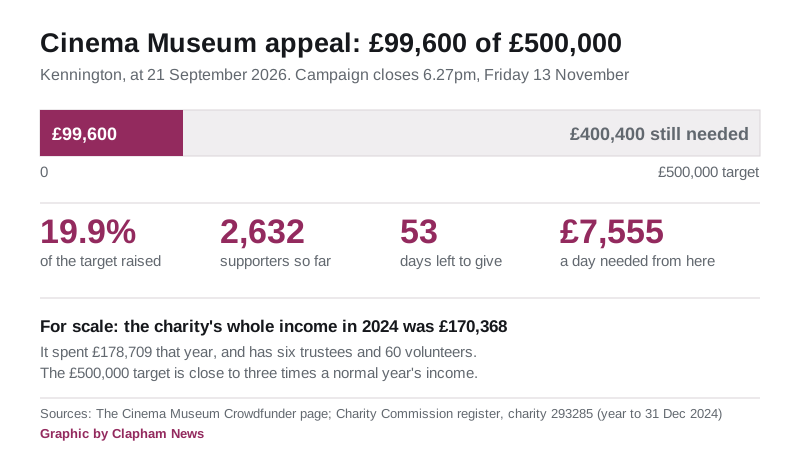
The Cinema Museum in Kennington has raised £99,600 of the £500,000 it says it needs to buy the building it occupies. It has until 6.27pm on Friday 13 November. That leaves 53 days to find the remaining £400,400, or about £7,555 a day.
The figures are from the museum’s own Crowdfunder page, checked on Monday 21 September. It had 2,632 supporters at that point, and the total stood at just under 20 per cent of the target.
The museum is at 2 Dugard Way, off Renfrew Road, SE11. That is in Kennington ward, about two and a half miles north east of Clapham Common, so this is not a Clapham story so much as a Lambeth one.
The numbers
- Target: £500,000
- Raised so far: £99,600, just under 20 per cent
- Supporters: 2,632
- Still needed: £400,400
- Deadline: 6.27pm, Friday 13 November 2026
- Days left from today: 53
Two details matter if you are thinking of giving.
The campaign runs on Crowdfunder’s “keep what you raise” basis. The museum receives every pledge made by the closing time whether or not the £500,000 is reached. Falling short would not cost donors their money. It would cost the museum the purchase.
The two deadlines the museum has published do not quite match. Its own July post says the money is needed “by December this year”. The Crowdfunder page it points people to closes at 6.27pm on 13 November. We have used the earlier of the two, because that is the one that stops donations.
What the museum says it is buying
The museum describes the purchase as “a once-in-a-generation opportunity to buy our home, the historic Grade II listed Lambeth Workhouse”, and says it has “fought hard to secure the option to buy”. It puts the run-up at four decades: “After 40 years of uncertainty, we finally have a chance to secure our home.”
It also says nearly 70,000 people signed a petition the last time the sale of the site put it at risk of closure. Both of those are the museum’s own accounts, on its campaign post of 7 July and on the Crowdfunder page.
The building is on the national list, partly because of Chaplin
The museum occupies the surviving administrative block of the Lambeth Workhouse. Historic England listed it at Grade II on 4 September 2008 (list entry 1392740). The entry records that it was built between 1871 and 1873 for the Parish of St Mary, Lambeth, to designs by R Parris and TW Aldwinckle, and extended in 1880. The foundation stone is dated 3 April 1871 and was laid by the pottery manufacturer John Doulton, then chairman of the Board of Guardians.
Two things in that entry are worth pulling out. The first is that the designation reasons explicitly cite “historic interest for the Charlie Chaplin association, and the Doulton connection”. The Chaplin link is not a museum marketing line. It is part of why the state protects the building. The museum’s about page puts it plainly: Chaplin entered the workhouse as a child when his mother faced destitution.
The second is the room the museum runs its screenings in. The listing describes the upper floor as “a large open-plan chapel” of five bays, with an unusual partly-ceiled hammerbeam roof and perforated zinc ventilation panels in the boarded ceiling. The long pavilion ward blocks that stood either side were demolished years ago. What survives is the front block and the water tower.
The site around it already has permission for 126 flats
This is the part missing from most of the coverage, and it is on Lambeth’s own planning register.
The museum’s building sits inside a larger development site, recorded by the council as Woodlands Nursing Home, 1 Dugard Way. On 20 December 2024 Lambeth granted planning permission for its redevelopment under reference 21/04356/FUL. The register records the decision as a committee decision, and logs 850 comments against the application.
The permitted scheme:
- retains the Master’s House and its ancillary buildings, which is the museum
- demolishes the former care home
- builds a central residential block of three to 14 storeys
- adds peripheral development of two to four storeys
- provides 126 homes: 26 studios, 41 one-bed, 50 two-bed, seven three-bed and two four-bed
An earlier and much taller version did not survive. Application 19/02696/FUL proposed a 29-storey building with 258 homes. The register records it as non-determination on 7 January 2021, and the subsequent appeal as dismissed after a public inquiry. A 2018 screening opinion before that had tested proposals for roughly 320 homes in a tower of up to 35 storeys, and described “the retention of the existing cinema museum use at Masters House” (18/04018/EIASCR).
So the museum’s building has been drawn into three successive redevelopment proposals since 2018, and retained in all of them. Neither the planning register nor the campaign names who owns it today, and the museum has not said who it is buying from.
£500,000 against an income of £170,368
The Cinema Museum is registered charity 293285. Its entry on the Charity Commission register gives the scale of what it is attempting.
For the year to 31 December 2024 it reported income of £170,368 and expenditure of £178,709. It has six trustees and 60 volunteers, no trustee is paid, and it has no trading subsidiaries. The target is therefore close to three times a normal year’s income.
Its reported income over five years:
| Year to 31 December | Income | Expenditure |
|---|---|---|
| 2020 | £141,650 | £91,000 |
| 2021 | £117,460 | £135,790 |
| 2022 | £224,610 | £159,240 |
| 2023 | £187,590 | £160,440 |
| 2024 | £170,368 | £178,709 |
The Commission rounds the 2020 to 2023 figures to the nearest £10. Spending has exceeded income in two of the five years, including the most recent one.
One small correction to the museum’s own wording is worth making. Its about page says it “receives no public funding”. The Commission’s record for 2024 notes that the £170,368 includes £15,000 from one government grant, and its 2022 figure includes £6,000 from government grants. No government grant income is recorded for 2020, 2021 or 2023. The museum is overwhelmingly donation-funded, but it is not quite nothing.
What it means for you
If you want to see inside the building, you cannot simply turn up. The museum has no regular opening hours. Access is by booked guided tour, which runs about two hours and includes roughly 30 minutes of short films. Tours are £15 for adults and £12 concessions, with carers admitted free, and the details are on the museum’s visit page.
If you want to give, the campaign page takes Gift Aid, which adds 25 per cent to a donation from a UK taxpayer at no extra cost. Give before 6.27pm on 13 November or it does not count towards this appeal.
If you are more interested in what happens to the wider site, the planning references above are public. Our guide to planning applications in Lambeth explains how to search the register and how to comment while an application is open. Lambeth’s own decisions on what gets built, and what it costs to live here, also run through our pages on council tax bands and house prices.
Sources
- The Cinema Museum: HELP US BUY OUR HOME, Crowdfunder, figures checked 21 September 2026
- The Cinema Museum, “Help Us Buy Our Home”, 7 July 2026
- The Cinema Museum, About and Visit
- Historic England, Administrative Block to Former Lambeth Workhouse, list entry 1392740
- Lambeth Council planning register, 21/04356/FUL, 19/02696/FUL and 18/04018/EIASCR
- Charity Commission, The Cinema Museum, charity 293285
Have your say