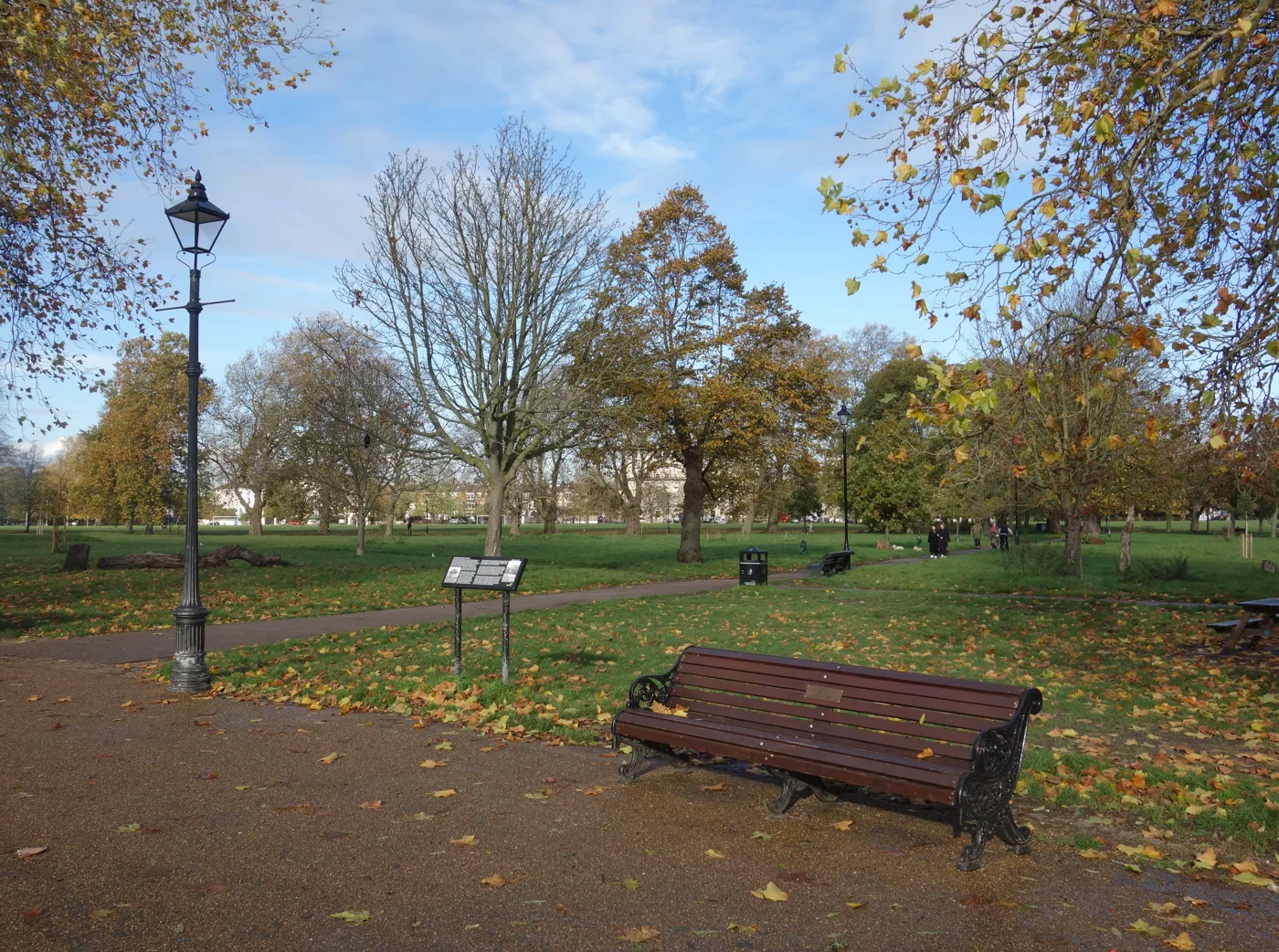

Lambeth came top of 24 London boroughs in the Good Parks for London 2026 report. New toilets on Clapham Common are among the changes the report credits.
Lambeth’s parks service has been ranked the best in London. The borough came top of the 24 councils assessed in the Good Parks for London 2026 report, published on Monday by the charity Parks for London.
Lewisham came second and Hackney third. Croydon was named the most improved borough since the last assessment in 2024 (Parks for London).
How the ranking works
The report scores each borough’s parks service against ten criteria. They are:
- public satisfaction
- quality standards, such as Green Flag awards
- collaboration
- events
- health, fitness and wellbeing
- supporting nature
- community involvement
- skills development
- sustainability
- strategic planning
The report has been published since 2017 and is now produced every two years. Taking part is voluntary, so the ranking covers 24 boroughs rather than all 33 London councils (Good Parks for London 2026 report). Two thirds of the 24 improved their performance this year.
The top ten
| Position | Borough |
|---|---|
| 1 | Lambeth |
| 2 | Lewisham |
| 3 | Hackney |
| 4 | Hammersmith and Fulham |
| 5 | Barking and Dagenham |
| 6 | Southwark |
| 7 | Richmond upon Thames |
| 8 | Kingston |
| 9 | Croydon |
| 10 | Hounslow |
Neighbouring Wandsworth took part but was not in the top ten. The report lists the other 14 boroughs in alphabetical order without a position.
What it says about Clapham Common
The report singles Lambeth out for how it listens to park users. It says the council’s annual parks satisfaction survey and the Lambeth Parks Forum have “consistently identified toilets as the leading priority for improvement”.
Clapham Common is one of its examples. The report says lease negotiations with a café operator on the Common “secured investment in expanded and refurbished public toilets, including an accessible facility”. It was a response to concerns raised in the satisfaction survey and in a disability access study carried out in 2023 and 2024.
Across the borough, the report says Lambeth has opened five new toilet blocks and refurbished three more in the last two years. The council’s slides for the launch event list new toilets at:
- Brockwell Hall, in the café
- Clapham Common
- Larkhall Park
- Vauxhall Park
- West Norwood Cemetery
Refurbished toilets are listed at Brockwell Park, the Clapham Common café and Ruskin Park (launch event presentation).
Residents have also complained about litter and anti-social behaviour. The report says Lambeth has responded with a “Take It Home” litter campaign at its busiest parks, new signs drawn up with friends groups, and powers to issue fixed penalty notices for byelaw breaches.
Lambeth’s parks in numbers
The council’s launch slides give these figures:
- 137 parks and green spaces, run in-house since 2016
- an estimated 20 million park visits a year
- 29 Green Flag Awards and 3 Green Heritage awards
- 52 friends groups, with 4 parks under full community management
- £2.1 million a year in income, £1.1 million of it from sports bookings
- over 5,000 trees planted across the borough between 2023 and 2026
Lambeth’s deputy leader, Cllr Natalie Kane, said: “As an inner London borough with limited open space, where so few of our residents have their own gardens, it is crucial that Lambeth maintains its parks as accessible, communal spaces that can be freely enjoyed by everyone” (Love Lambeth).
What it means for you
The ranking does not change anything in the parks themselves. It is a measure of how the service is planned and run.
The report says Lambeth will start adding face-to-face surveys in parks to its online ones from 2026, to reach people less likely to fill in a form on the web. A borough-wide accessibility survey is also running. If something on Clapham Common needs fixing, the parks team takes feedback at Parks@Lambeth.gov.uk, the contact address given in the report.
Lambeth’s draft Parks Capital Investment Plan for 2026 to 2030 is being shaped by the same feedback, the report says. Requests for better playgrounds, sports facilities, bins and quieter play spaces for neurodiverse children are all feeding into it.
Have your say